
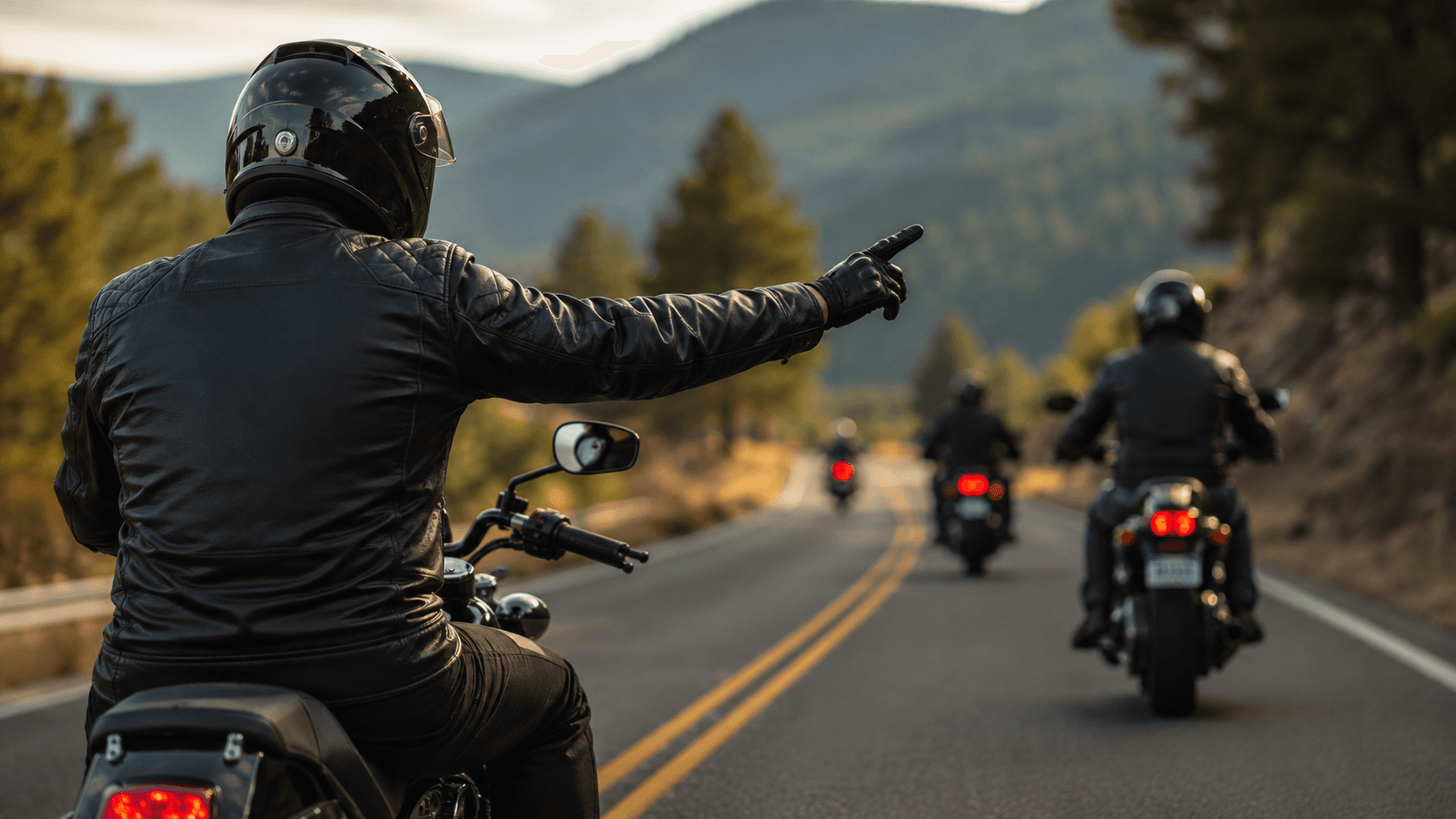
Motorcycle Hand Signals Explained: Every Rider Should Know These Signals
A motorcycle group ride is about more than following the rider in front of you. Good communication is what keeps a group organized, safe, and enjoyable.
Unlike drivers in cars, motorcyclists don't have the benefit of speaking to each other while riding. Helmet communication systems are useful, but they are not always available, and technology can fail.
That is why riders have developed a universal language on the road: motorcycle hand signals. These signals allow riders to communicate important information without stopping or using a radio. Whether you're joining your first group ride or you're an experienced rider, understanding these signals makes every ride smoother and safer.
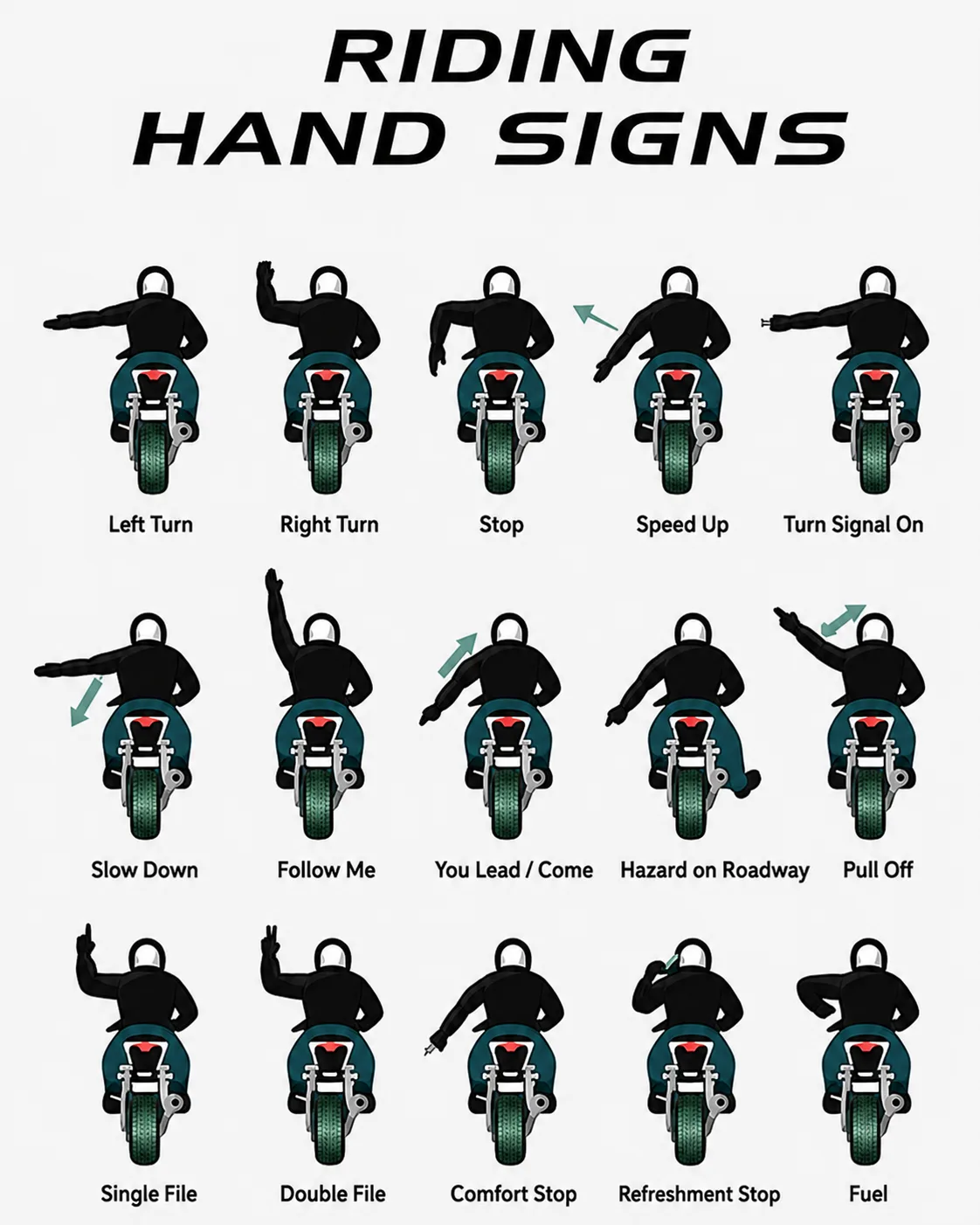
Why Motorcycle Hand Signals Matter
Group riding requires teamwork. A rider at the front may notice a hazard, need to stop for fuel, or change the riding formation. Without a way to communicate, the message may never reach the riders behind.
Hand signals help riders communicate:
- Upcoming turns
- Hazards on the road
- Stops and slowdowns
- Changes in formation
- Need for assistance
- Important ride updates
Learning these signals is one of the first steps toward becoming a responsible group rider.
1. Left Turn Signal
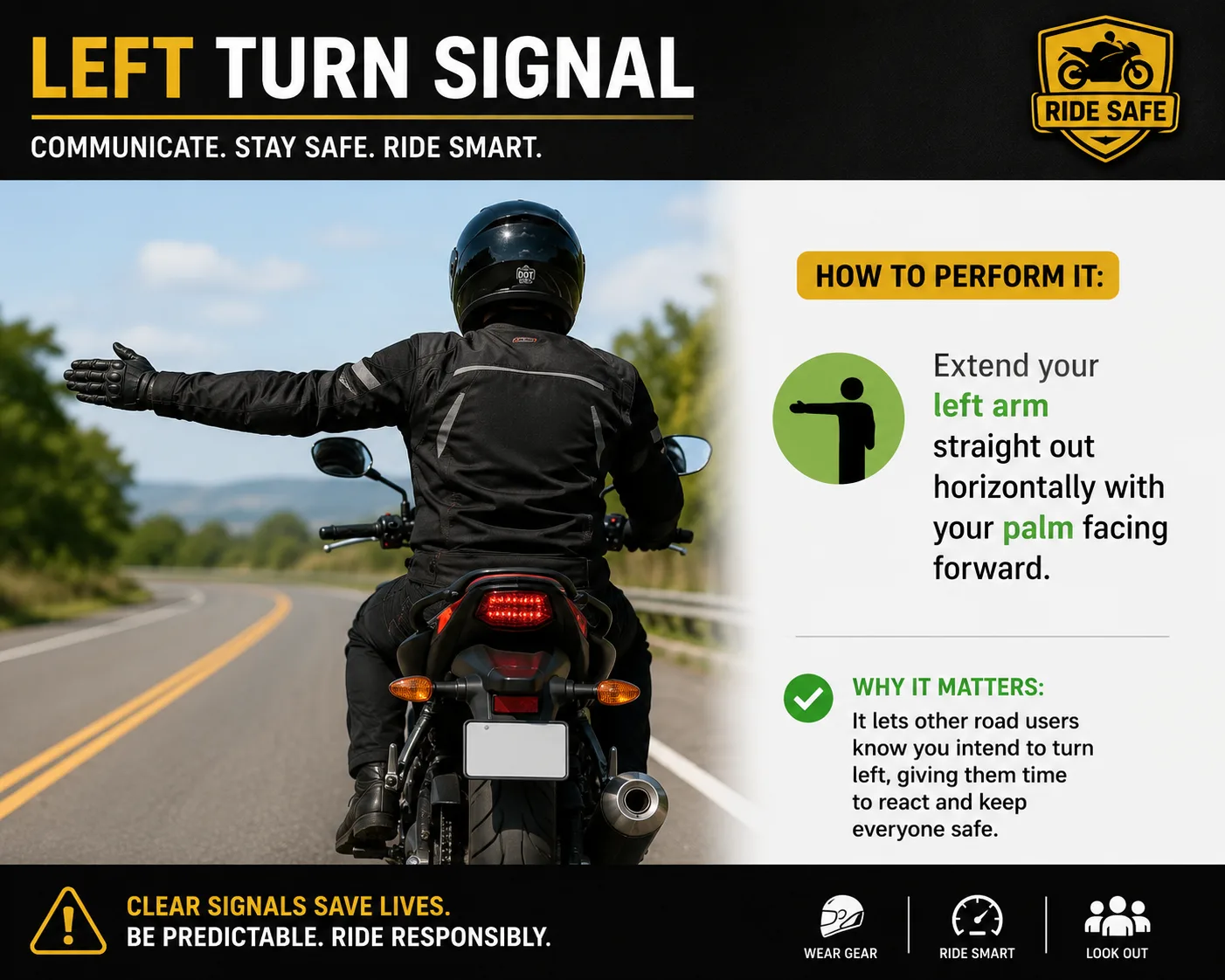
How to perform it: extend your left arm straight out horizontally with your palm facing forward.
Meaning: the group will be making a left turn. This is usually given by the lead rider before approaching an intersection or turning point.
2. Right Turn Signal
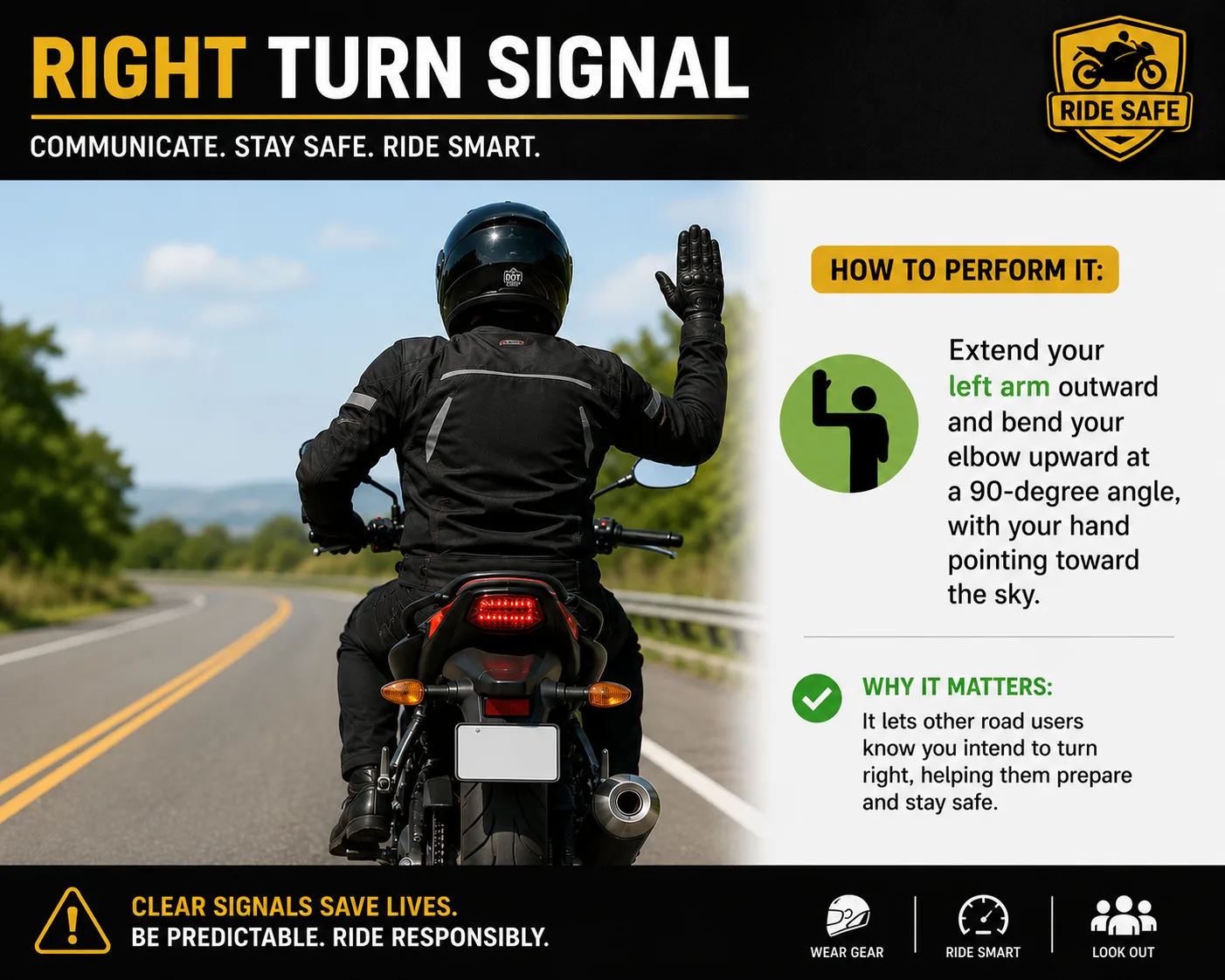
How to perform it: extend your left arm outward and bend your elbow upward at a 90-degree angle, with your hand pointing toward the sky.
Meaning: the group will be making a right turn. Since the right hand controls the motorcycle throttle and front brake, riders typically use their left arm to signal.
3. Stop Signal
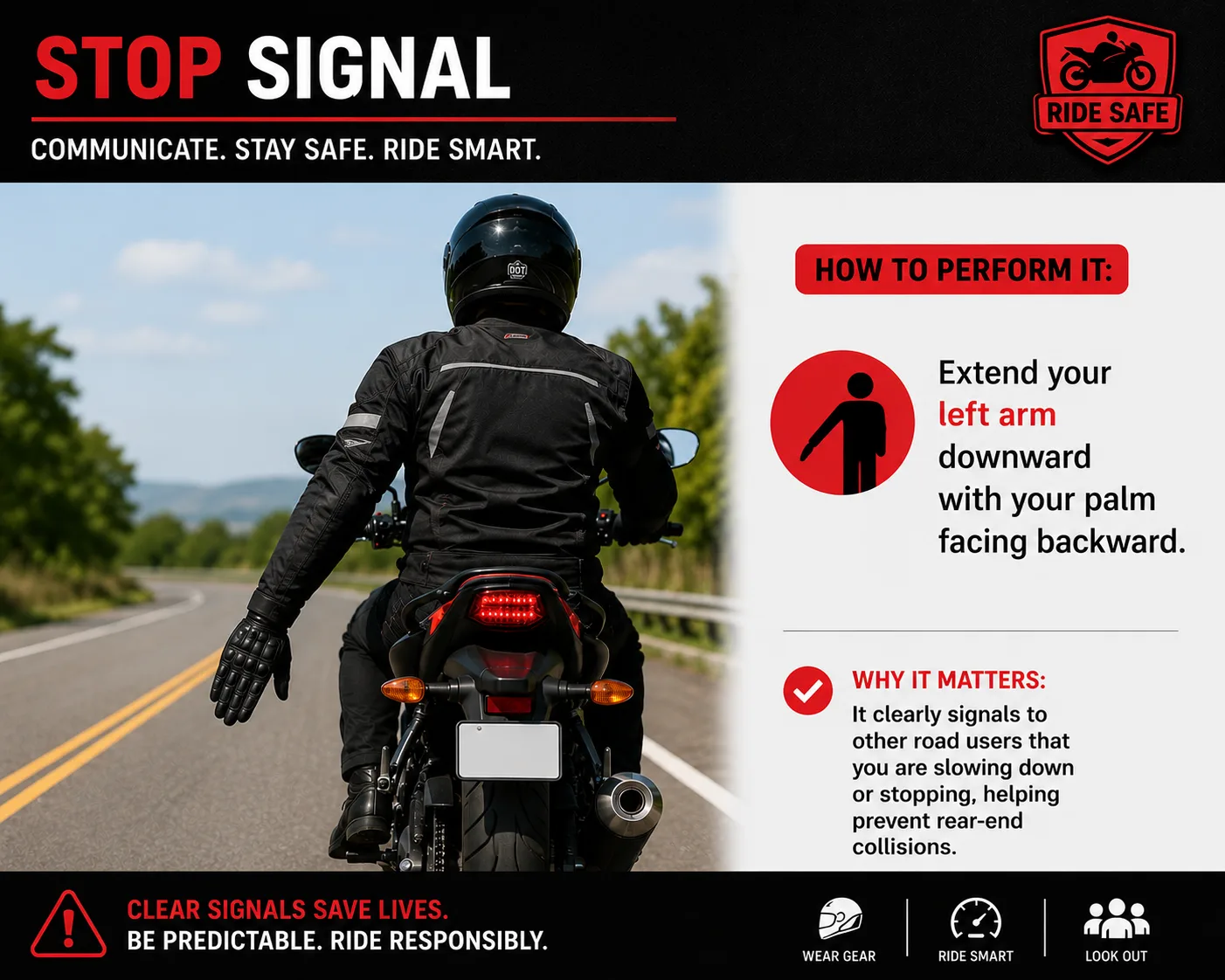
How to perform it: extend your left arm downward with your palm facing backward.
Meaning: the group is stopping. This signal is important during group rides because riders behind need enough time to slow down safely.
4. Slow Down Signal
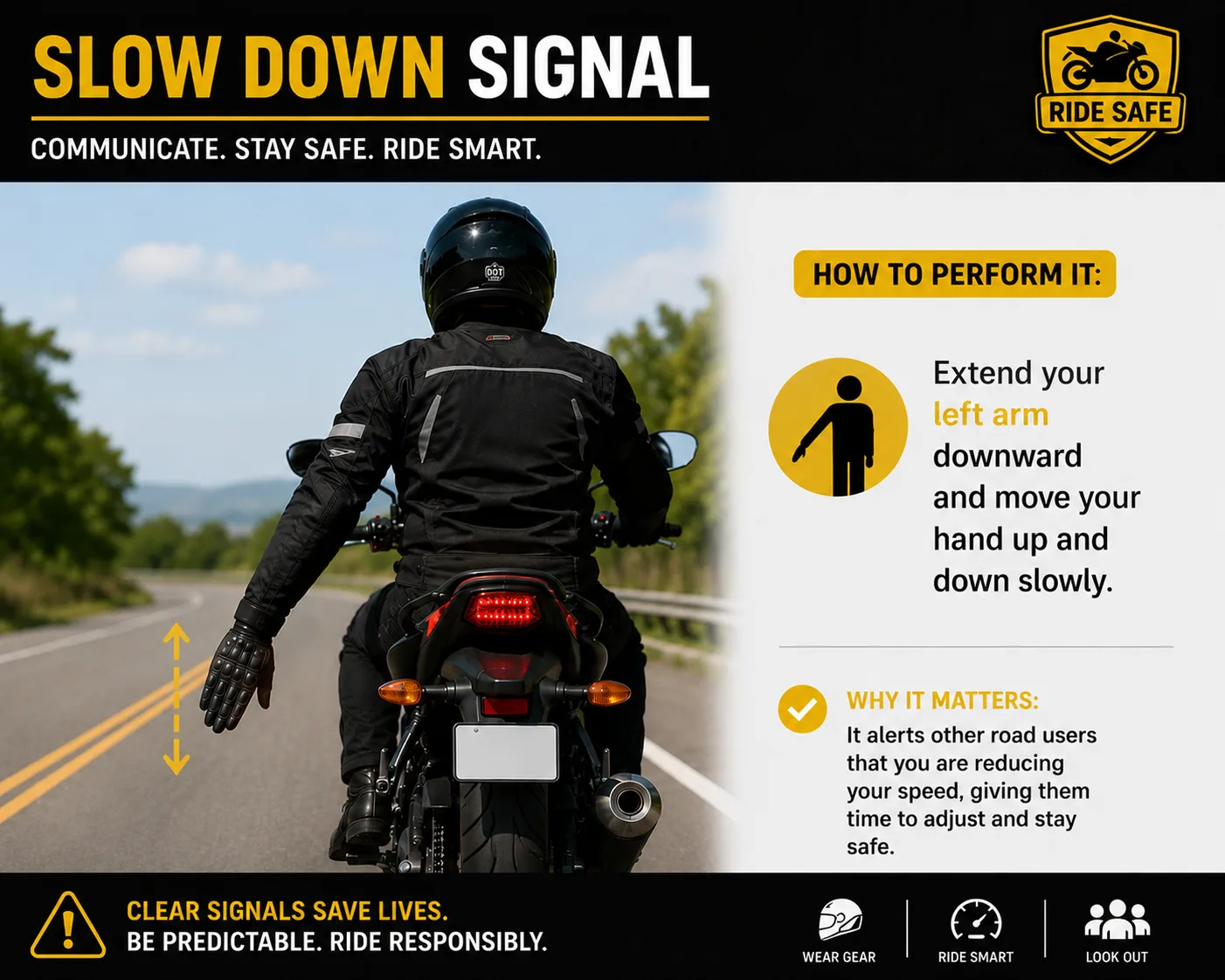
How to perform it: extend your left arm downward and move your hand up and down slowly.
Meaning: reduce speed. This may be used when:
- Approaching traffic
- Entering a town
- Navigating difficult roads
- Preparing for a turn
5. Hazard on the Road Signal
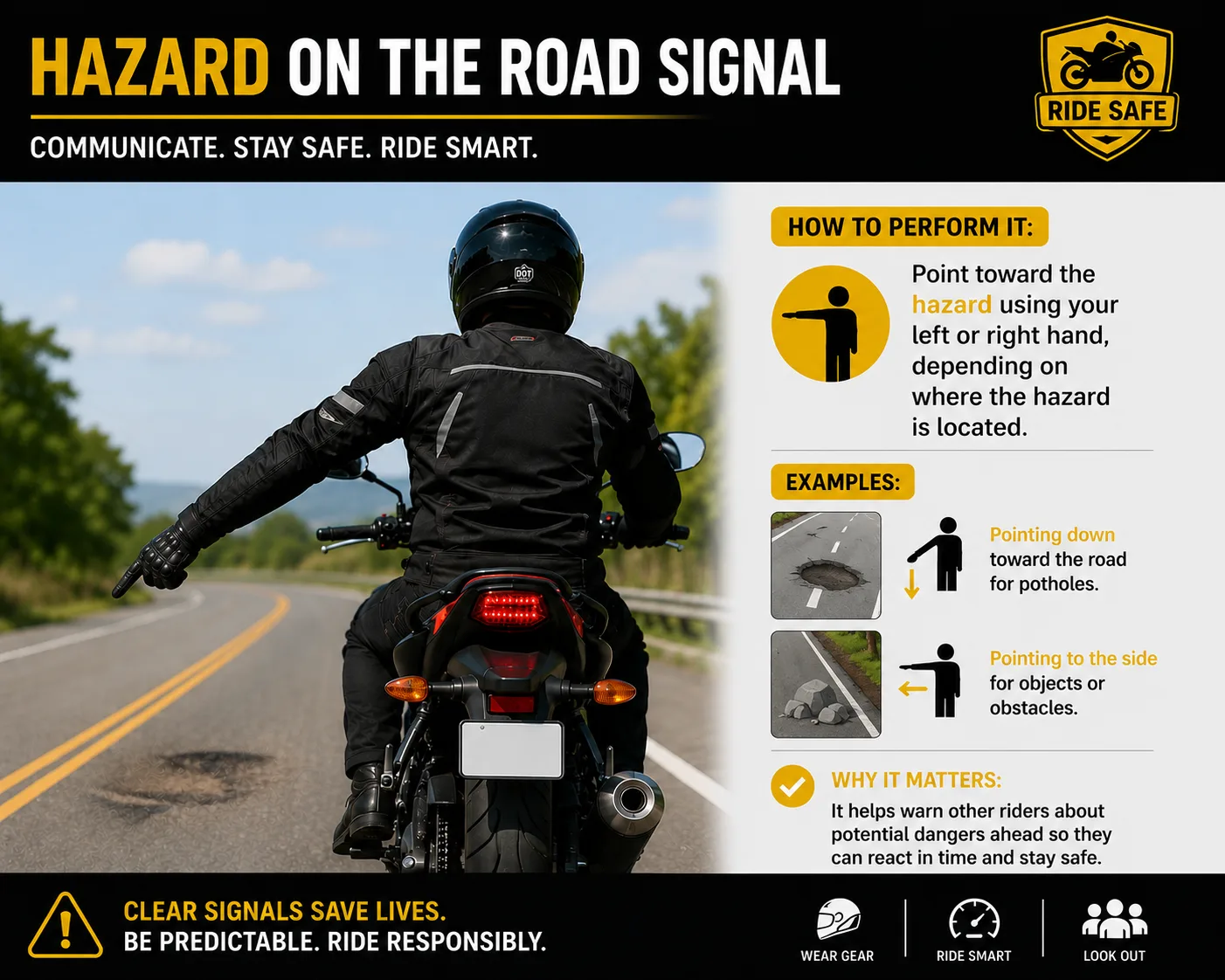
How to perform it: point toward the hazard using your left or right hand, depending on where the hazard is located. For example, point down toward the road for potholes, or point to the side for objects and obstacles.
Meaning: there is something other riders should be aware of. This helps riders behind prepare instead of reacting suddenly.
6. Fuel Stop Signal
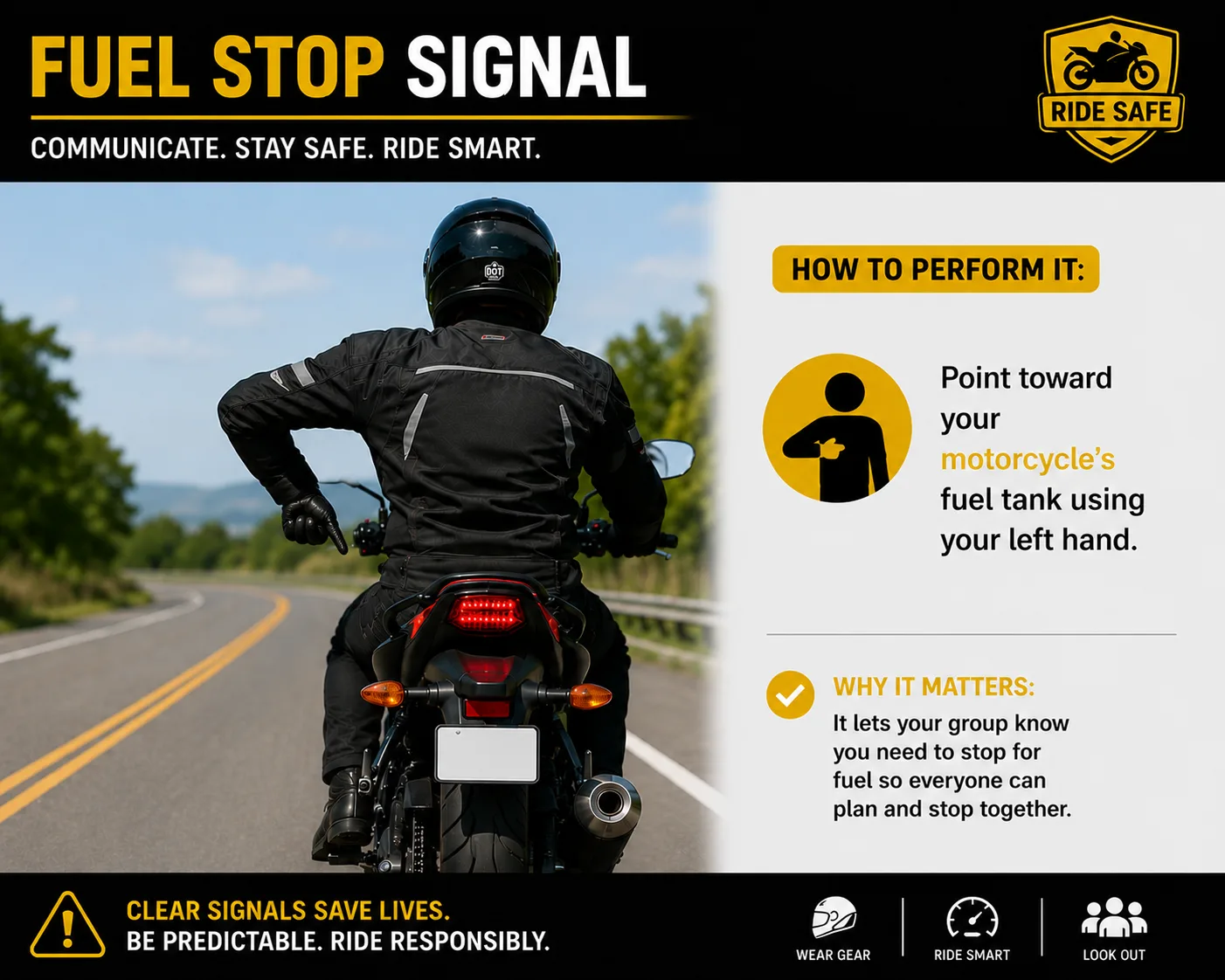
How to perform it: point toward your motorcycle's fuel tank using your left hand.
Meaning: you need to stop for fuel. Running out of fuel during a group ride can create unnecessary delays, so communicating early is important.
7. Need to Pull Over Signal
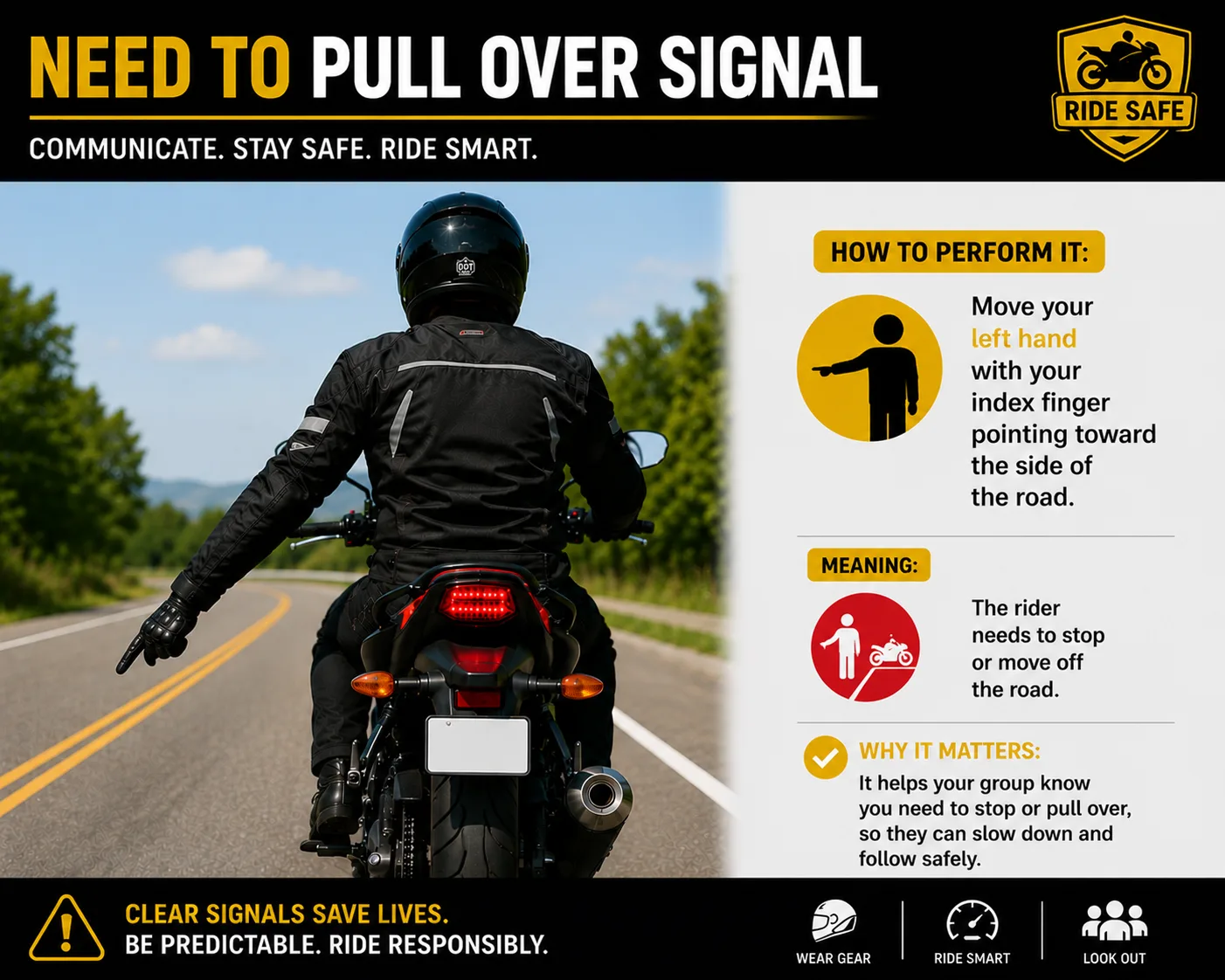
How to perform it: move your left hand with your index finger pointing toward the side of the road.
Meaning: the rider needs to stop or move off the road. This may be used for:
- Mechanical issues
- Safety concerns
- Adjusting equipment
- Rider discomfort
8. Single File Formation Signal
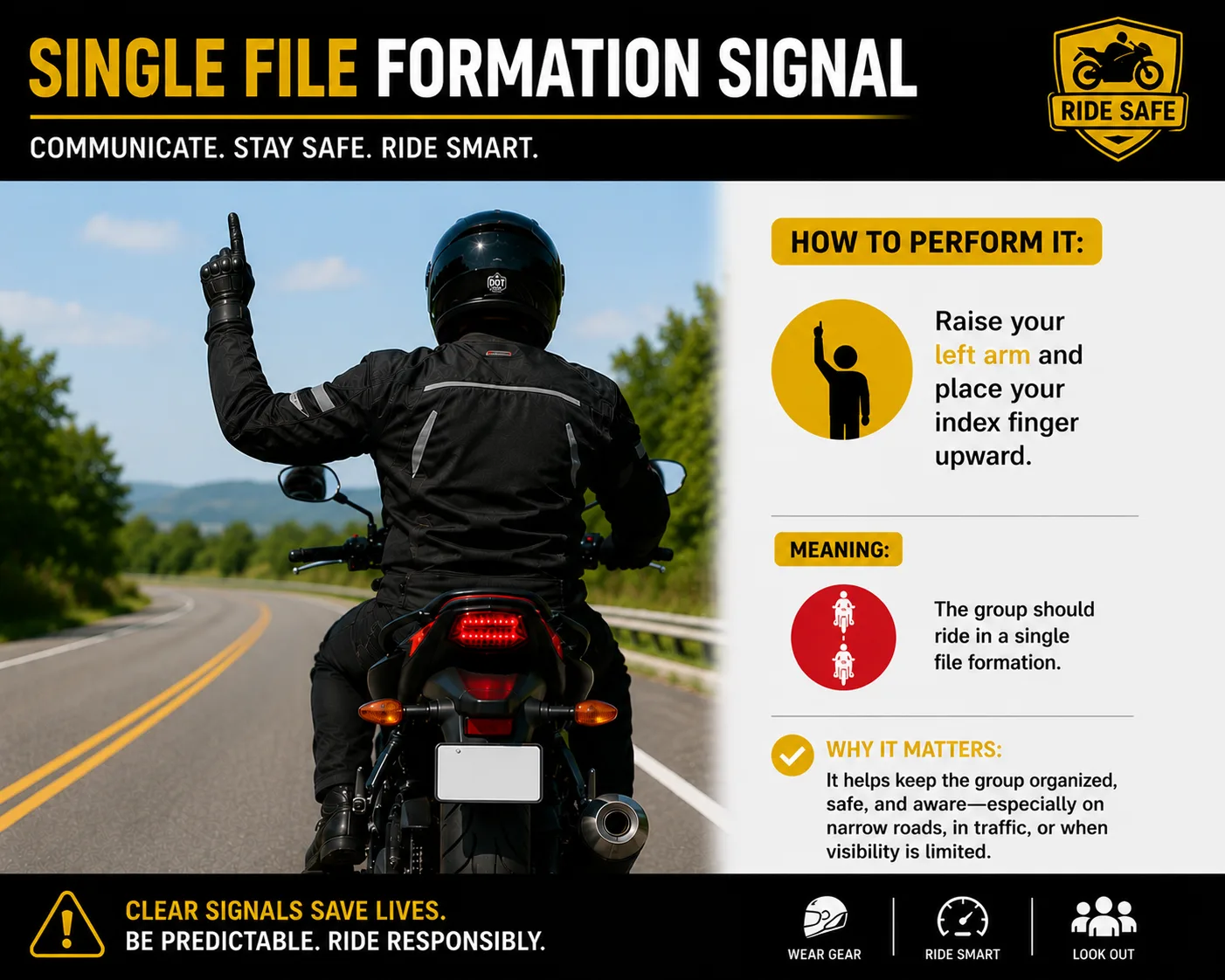
How to perform it: raise your left arm and place your index finger upward.
Meaning: the group should ride in a single-file formation. This is often used when:
- Roads become narrow
- Traffic increases
- Visibility is limited
- Passing vehicles need more space
9. Staggered Formation Signal
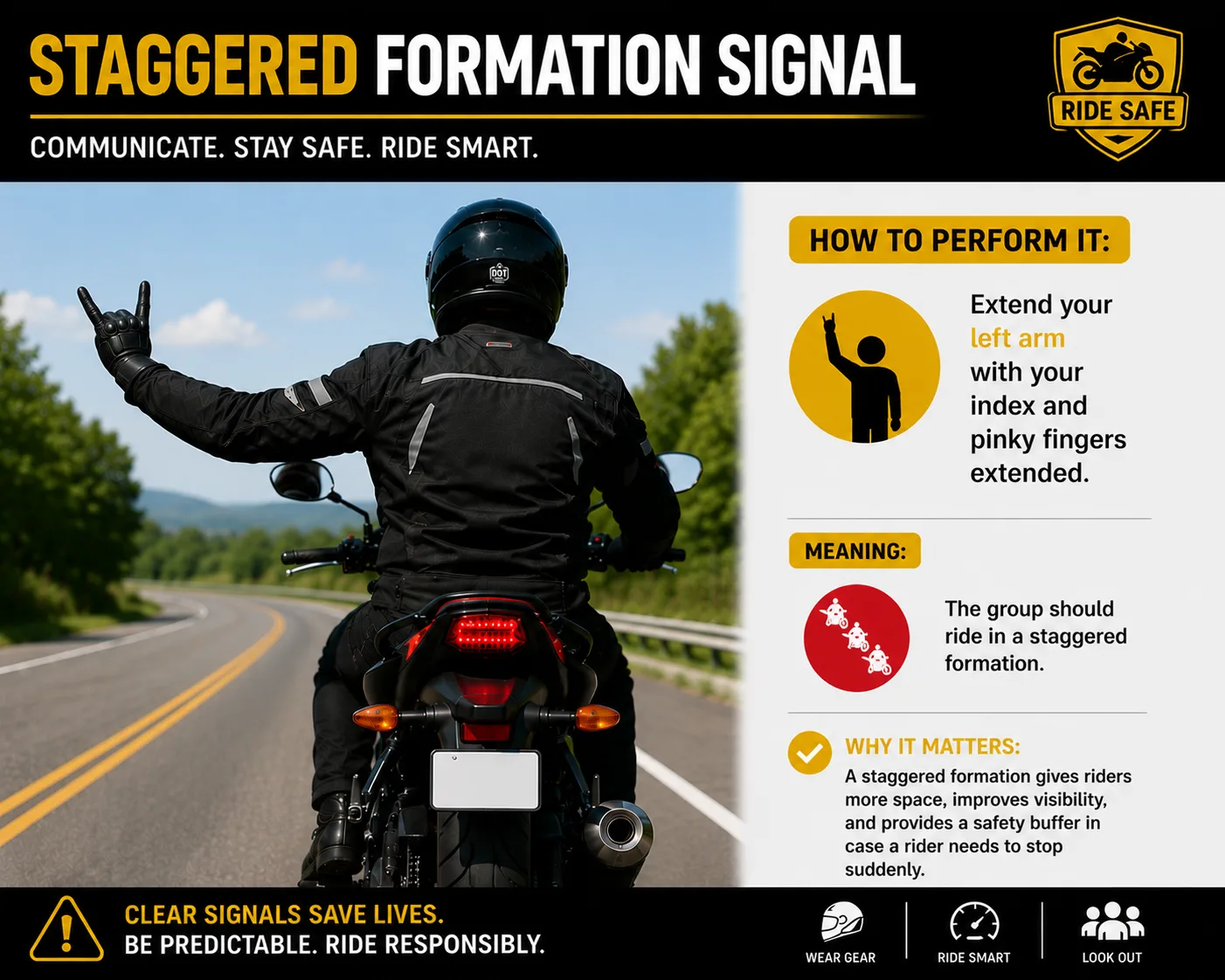
How to perform it: extend your left arm with your index and pinky fingers extended.
Meaning: maintain a staggered riding formation. A staggered formation gives riders more space while keeping the group together.
10. Follow Me Signal
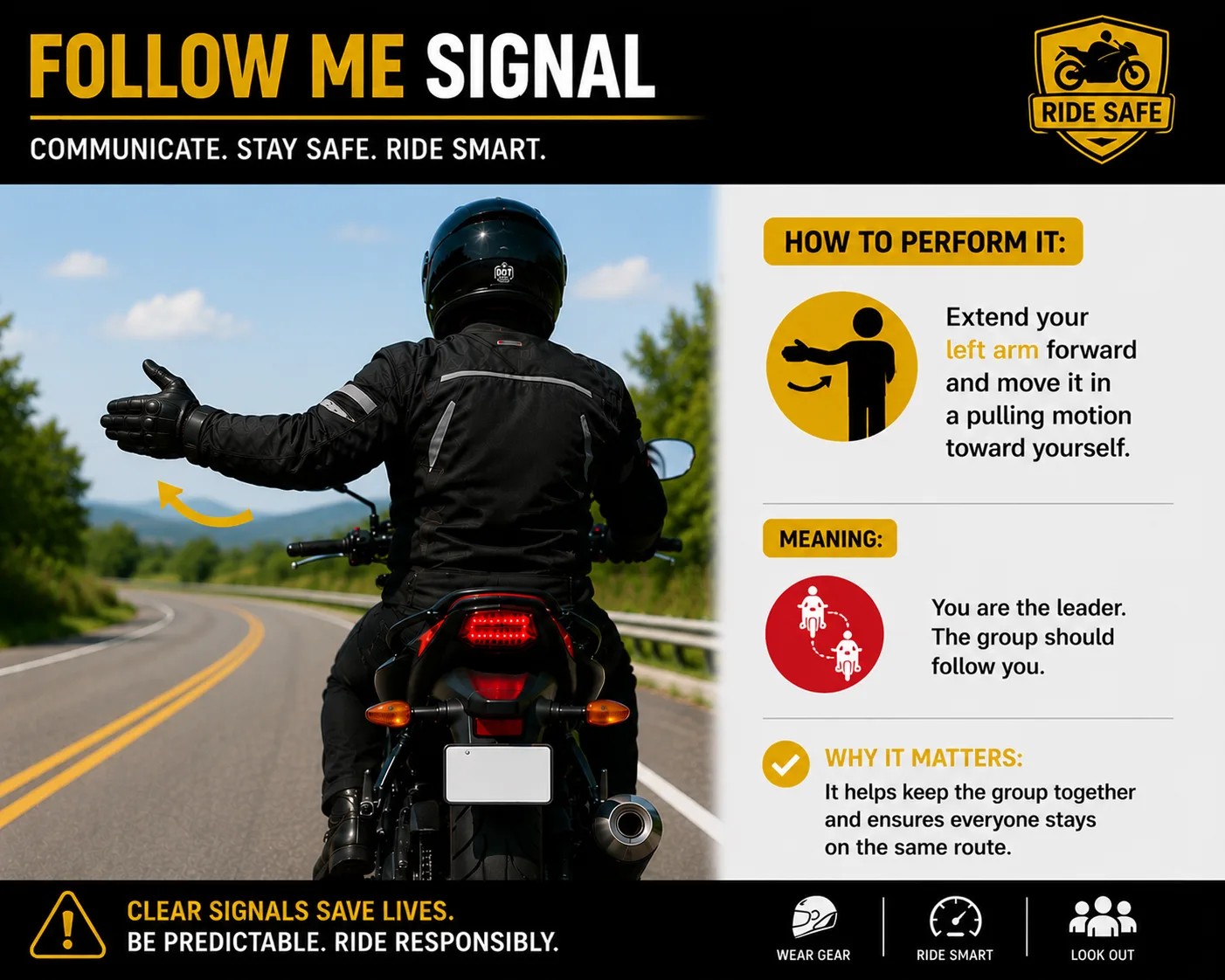
How to perform it: extend your left arm forward and move it in a pulling motion.
Meaning: follow my lead. This is commonly used by ride leaders when guiding riders through unfamiliar areas.
11. You Lead Signal
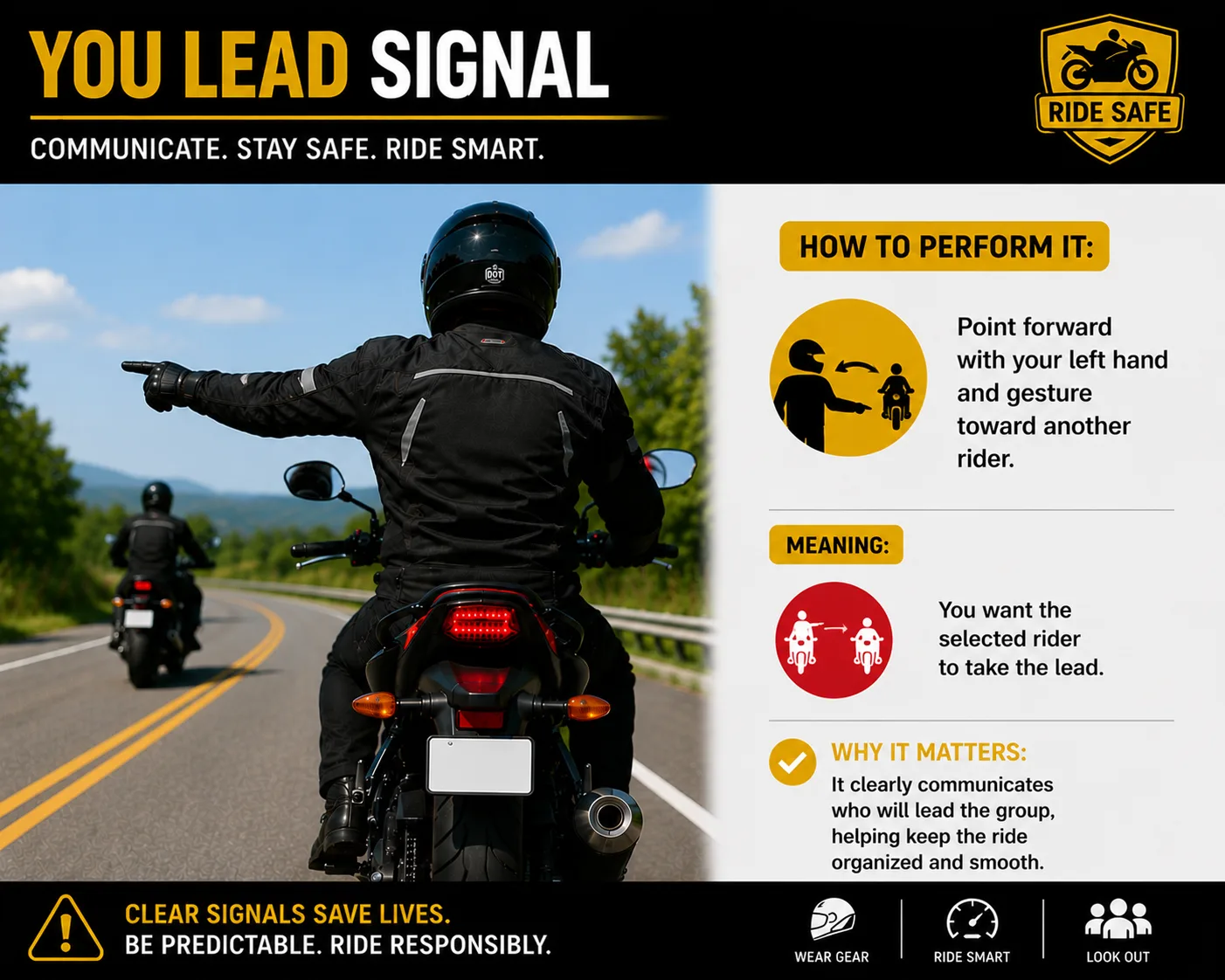
How to perform it: point forward and gesture toward another rider.
Meaning: that rider should take the lead. This can happen when:
- The lead rider needs to leave
- Another rider knows the route better
- The group changes leaders
Motorcycle Communication: More Than Hand Signals
Hand signals are an important part of group riding, but successful rides require more than knowing the signs. Before a group ride, riders should understand:
- The planned route
- Meeting location
- Departure time
- Fuel stops
- Riding formation
- Emergency procedures
- Group expectations
A quick rider briefing before departure can prevent confusion later. For a fuller picture of how riders are expected to behave once the group is moving, see our motorcycle group ride etiquette guide.
Common Mistakes New Group Riders Make
Even experienced riders can make mistakes when joining a new group. Avoid these:
Ignoring the rider briefing
Every group has its own expectations. Take a few minutes to understand the plan before leaving.
Following too closely
Give yourself enough space to react safely.
Assuming everyone knows the route
Always confirm where the group is heading and where stops will happen.
Not communicating problems
If you have a mechanical issue, need fuel, or feel uncomfortable, signal early.
Trying to match faster riders
Ride at your own pace. A safe ride is more important than keeping up.
How Ride Organizers Can Improve Communication
For larger motorcycle groups, hand signals alone may not be enough. Organizers should also provide riders with clear information before the ride:
- Where to meet
- When to arrive
- The planned route
- Expected stops
- Ride difficulty
- Important instructions
Tools like Tribes help organizers create a dedicated ride page where participants can access all ride details before departure. Instead of searching through long WhatsApp conversations, riders can quickly find the information they need and arrive prepared. Our guide on how to organize a motorcycle group ride walks through the rest of the planning.
Motorcycle hand signals are a simple but powerful way riders communicate on the road. They help groups stay together, improve safety, and create a smoother riding experience for everyone involved.
Whether you're joining your first group ride or leading dozens of riders, learning these signals is an essential part of becoming a better member of the motorcycle community. The best rides aren't just about the destination, they're about everyone making it there safely together.
Frequently Asked Questions
Are motorcycle hand signals universal?
Many motorcycle hand signals are widely recognized among riders, especially for common actions like turning, stopping, and slowing down. However, individual clubs or riding groups may have additional signals or preferences.
Do I need to know hand signals before joining a group ride?
Yes. Understanding basic motorcycle hand signals helps you communicate effectively and makes group rides safer and more enjoyable.
Do motorcycle riders still use hand signals with communication devices?
Yes. Bluetooth communication systems are useful, but hand signals remain valuable because they are visible to all riders and work even when technology is unavailable.
Who gives signals during a group ride?
Usually, the lead rider communicates route changes and upcoming instructions, while riders behind may repeat signals so everyone in the group receives the message.