
Motorcycle Group Ride Etiquette: 12 Rules Every Rider Should Know
Joining a motorcycle group ride is one of the best ways to experience the road. Whether you're heading out for a Sunday cruise, a scenic road trip, or a community ride, riding with others is about more than just enjoying the journey—it's about teamwork, communication, and respect.
Good group ride etiquette keeps everyone safer, reduces confusion, and ensures every rider has a great experience. If you're new to group riding or organizing rides for others, these are the essential rules every rider should know.
Why Motorcycle Group Ride Etiquette Matters
Unlike riding alone, group rides require everyone to work together. One rider's actions can affect the entire group. Following proper etiquette helps:
- Improve safety
- Keep the group organized
- Prevent accidents
- Make the ride more enjoyable
- Build trust among riders
Great rides aren't just planned well—they're ridden well. For tips on the planning side, check out our guide on how to organize a motorcycle group ride.
1. Arrive Early
One of the easiest ways to show respect for the group is by arriving before the scheduled departure time. Use those extra minutes to:
- Fuel your motorcycle
- Inspect your bike
- Meet other riders
- Attend the pre-ride briefing
- Clarify the route if needed
Making the entire group wait because you're late is never a good way to start a ride.
2. Attend the Pre-Ride Briefing
Even experienced riders shouldn't skip the briefing. The organizer may cover:
- The planned route
- Fuel and rest stops
- Riding formation
- Hand signals
- Speed expectations
- Emergency contacts
- What to do if the group gets separated
Knowing the plan beforehand helps everyone ride with confidence.
3. Ride Within Your Ability
Never feel pressured to keep up with faster riders. Ride at a pace you're comfortable with. If you're new to group riding, let the organizer know before the ride begins. A good group adapts to its riders—not the other way around.
4. Maintain a Safe Following Distance
Avoid riding too close to the motorcycle ahead. Maintain enough space to react to:
- Sudden braking
- Road hazards
- Animals
- Unexpected traffic
The exact distance depends on weather, speed, and road conditions, but more space is almost always better than less.
5. Hold Your Position
Unless necessary, avoid weaving through the group or constantly changing positions. Predictable riding makes everyone safer. If you need to change position, communicate clearly and do so carefully.
6. Communicate Clearly
Good communication keeps the group together. Use:
- Hand signals
- Turn signals
- Brake lights
- Rider-to-rider communication systems (if available)
Point out hazards like:
- Potholes
- Gravel
- Debris
- Animals
- Stopped vehicles
Helping the riders behind you benefits the entire group. If you're not sure which gesture means what, our guide to motorcycle hand signals covers each one.
7. Respect the Ride Leader
Every organized ride should have a designated ride leader. The leader is responsible for:
- Navigation
- Pace
- Scheduled stops
- Route changes
- Overall coordination
Unless instructed otherwise, avoid overtaking the ride leader.
8. Respect the Sweep Rider
The sweep rider stays at the back of the group to assist anyone who encounters problems. If you experience:
- Mechanical issues
- A flat tire
- Fatigue
- An emergency
The sweep rider is there to help.
9. Don't Leave Without Informing Someone
Need to head home early? Tell the ride leader or another rider before leaving. Otherwise, the group may stop and spend valuable time searching for someone who's already gone home.
10. Be Prepared
Every rider should arrive ready for the journey. Bring:
- A full fuel tank
- Water
- Basic tools
- Rain gear
- Emergency contact information
- Charged phone
- Valid riding documents
Preparation reduces unnecessary delays.
11. Respect Other Road Users
Group rides don't give riders priority over other vehicles. Be courteous to:
- Drivers
- Cyclists
- Pedestrians
- Local communities
Avoid unnecessary revving, aggressive overtaking, or blocking intersections unless authorized for an organized event. Good riding etiquette reflects positively on the motorcycle community.
12. Help Keep Everyone Informed
One of the biggest frustrations during group rides isn't the riding—it's missing information. Questions often come up before the ride:
- What's the meeting point?
- Has the departure time changed?
- Where's the lunch stop?
- Who's attending?
- What's the route?
Instead of relying on dozens of messages scattered across WhatsApp or social media, organizers can keep everything in one place and simply share one link with participants. When everyone has access to the same ride details, confusion is reduced and the ride runs much more smoothly.
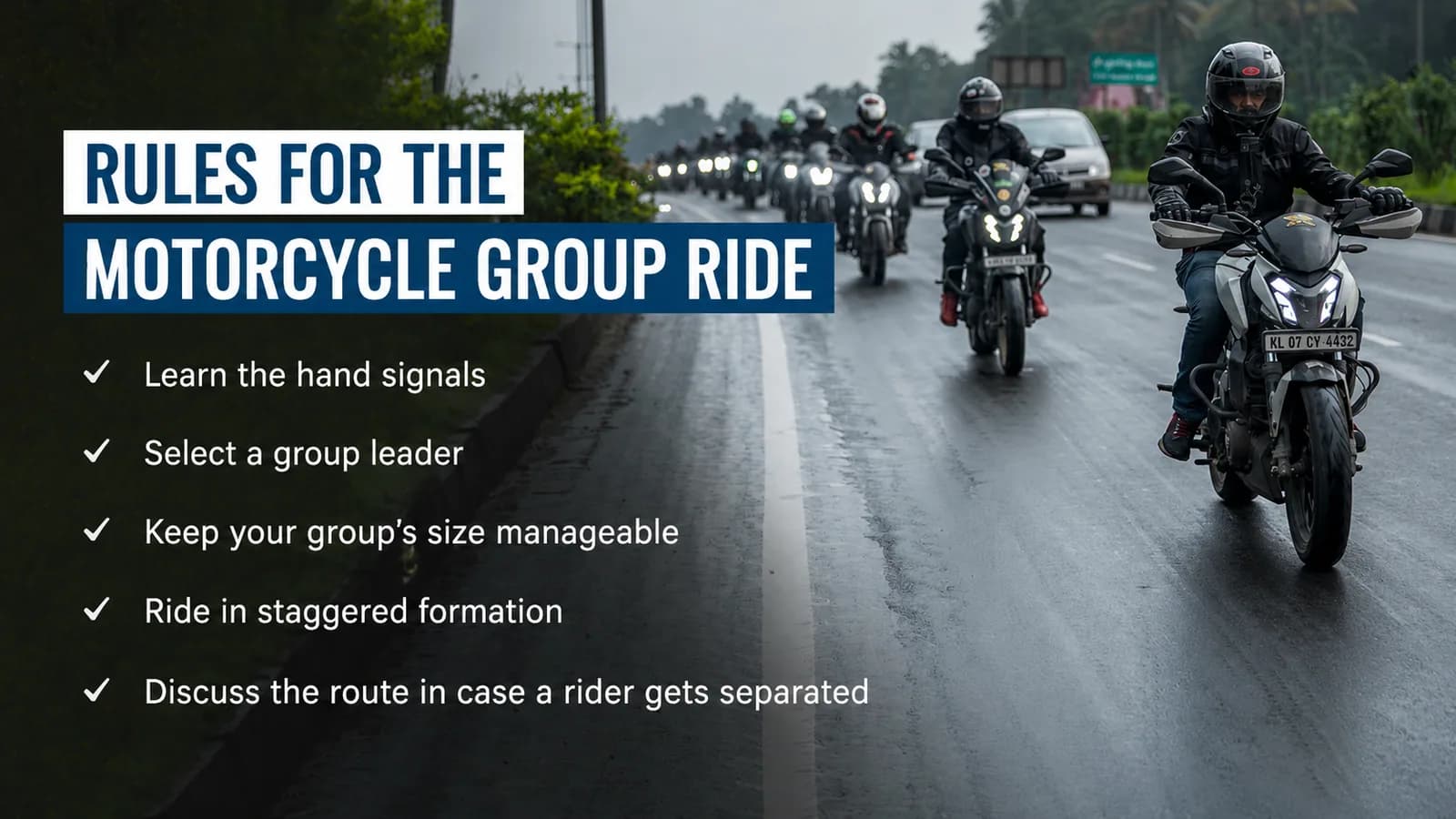
Group Ride Etiquette Checklist
Before every ride, remember to:
- Arrive early
- Attend the ride briefing
- Ride within your limits
- Keep a safe following distance
- Hold your position
- Use hand signals
- Respect the ride leader
- Respect the sweep rider
- Tell someone if you're leaving early
- Come prepared
- Respect other road users
- Stay informed about ride updates
Common Mistakes to Avoid
Even experienced riders can develop bad habits. Watch out for these common mistakes:
- Arriving with an empty fuel tank
- Overtaking without warning
- Ignoring ride instructions
- Following too closely
- Riding beyond your skill level
- Failing to communicate when plans change
- Missing important updates buried in chat messages
Avoiding these mistakes makes every ride safer and more enjoyable.
Make Group Rides Easier to Organize with Tribes
Good etiquette starts before the engines are even running. As an organizer, one of the best ways to set your group up for success is to make sure everyone has the information they need before ride day.
With Tribes, you can create a dedicated ride page that includes:
- Meeting location
- Date and departure time
- Route overview
- Ride guidelines and etiquette
- Fuel and rest stops
- Important updates
Then simply share one link with your riding community through WhatsApp, Instagram, Facebook, Discord, or any platform you already use. Instead of answering the same questions repeatedly, every rider knows where to find the latest information—making the ride smoother for everyone.
Frequently Asked Questions
What is motorcycle group ride etiquette?
Motorcycle group ride etiquette refers to the guidelines and best practices riders follow to keep group rides safe, organized, and enjoyable. It includes respecting the ride leader, maintaining safe distances, communicating hazards, and riding predictably.
What formation should a motorcycle group use?
The appropriate formation depends on road and traffic conditions. Ride organizers should communicate the expected formation during the pre-ride briefing and adjust it as conditions change.
Should beginners join motorcycle group rides?
Yes. Beginners can enjoy group rides as long as they ride within their ability, communicate with the organizer, and choose rides that match their experience level.
How do organizers keep riders informed?
The easiest approach is to keep all ride details—meeting point, departure time, route, guidelines, and updates—in one place and share a single link with participants instead of relying on scattered chat messages.